
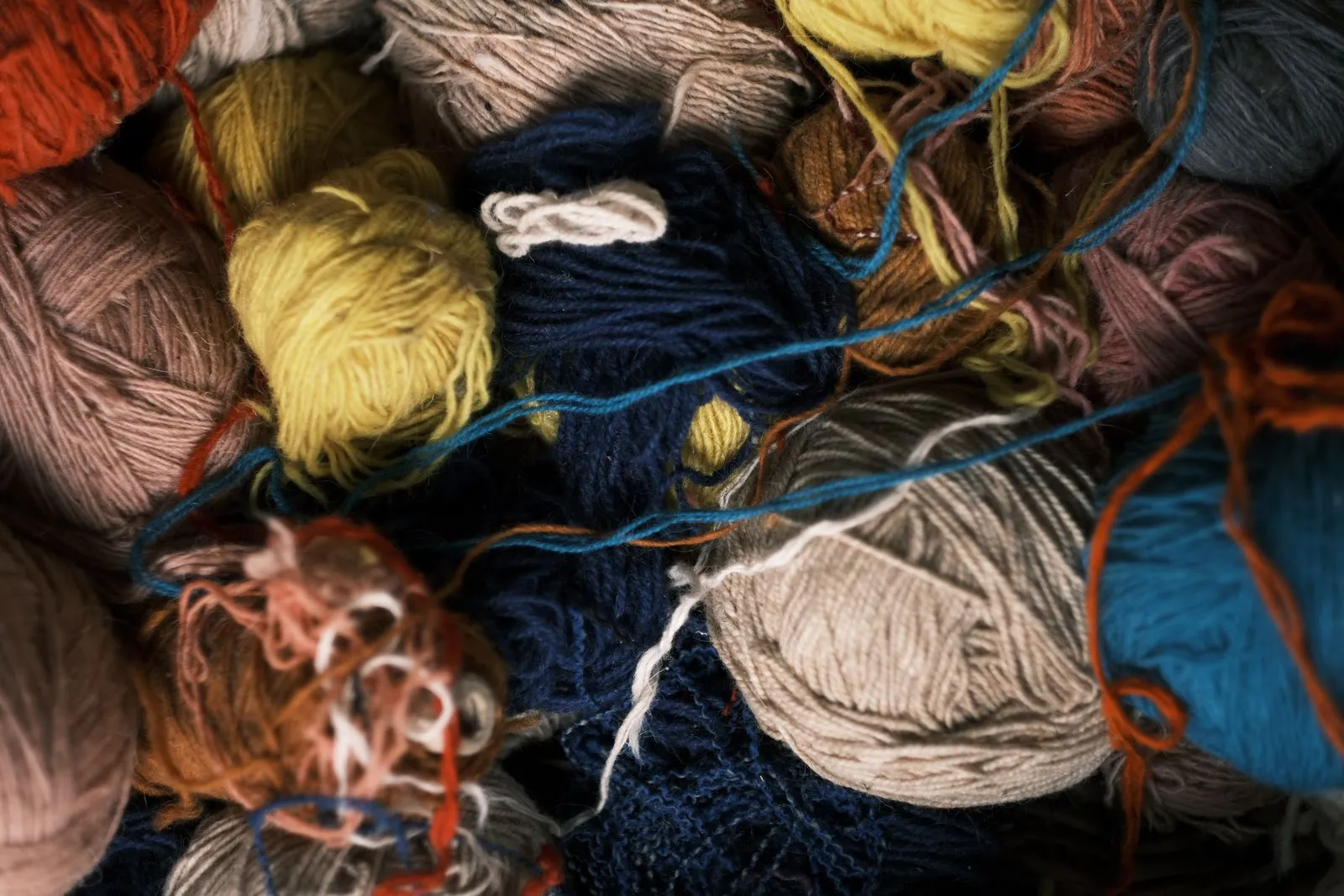
Buying yarn for a project is easier when you start with the pattern’s total yardage, not just its suggested number of skeins. Then compare that amount with the yardage on the yarn label and check that the yarn weight and gauge are a suitable match. A little extra can help cover swatching, changes in gauge, or a longer-than-planned garment. These steps give you a useful estimate before you shop and reduce the chance of running short mid-project.
Start With Pattern Yardage
Find the pattern’s materials list and look for total yardage. If it gives a range by size, use the number for the size you plan to make. Yardage is more useful than skein count because skeins from different yarns can contain very different amounts. Check whether the pattern lists one total for all colors or separate amounts for each color, especially for colorwork or stripes.
If the pattern lists only a number of skeins, identify the exact yarn and skein size it recommends. Multiply the skein count by the yardage per skein to get the project’s approximate total. For example, a pattern calling for five skeins with 200 yards each indicates about 1,000 yards. Treat that as a starting estimate, since substitutions may have different yardage per skein.
Read the Yarn Label
Look for the yards per skein on the yarn label or product listing. Divide the pattern’s total yardage by the yardage in one skein, then round up to a whole skein. If a project calls for 1,000 yards and each skein contains 220 yards, you need five skeins to reach at least the listed amount. Check the label’s net weight and fiber information too, so you can distinguish similar-looking products.
Match the yarn’s weight and the pattern’s gauge, rather than relying on a name like “worsted” alone. Weight categories can vary between yarns, and your knitting tension affects how much yarn the finished piece uses. Make a gauge swatch with the yarn and needles you plan to use. If your stitch count differs from the pattern gauge, adjust needle size and swatch again before settling on your purchase.
Plan for Project Details
Consider details that can raise yarn use. A longer sweater, wider sleeves, a deeper shawl, or added length on a hat all require more yarn than the pattern’s standard version. Texture patterns, cables, and colorwork can also use more yarn than a simple fabric. Follow any yardage notes in the pattern, and avoid assuming that a different construction or stitch pattern will use the same amount.
For a substitute yarn, compare both yardage and gauge, then allow a modest buffer if you can. Extra yarn is especially useful when you are between sizes, changing the length, or working with a yarn that is difficult to match later. For a multi-color project, calculate each color separately and consider buying an extra skein of a shade used heavily. Keep the same dye lot when possible to help colors look consistent.
Check Before You Cast On
Before starting, confirm that the skeins you bought add up to at least the pattern’s yardage for your size and chosen version. If the yarn is sold by weight, use its stated yardage rather than trying to convert project yardage into ounces or grams. Different fibers and yarn constructions can provide different lengths at the same weight. Keep the ball bands until the project is finished so you can refer to care instructions and product details.
If you are unsure, bring the pattern’s materials information and the yarn label details to a yarn shop and ask for help checking the math. Nashville Yarn Co. can help knitters compare yardage and plan a purchase. Once you have the yarn, knit and measure a gauge swatch before beginning the full project; it is a practical final check that your yarn, needles, and knitting tension work together.
Use the pattern’s yardage as your target, divide by the yarn’s yards per skein, and round up. Then check gauge, account for any changes you plan to make, and consider a small buffer—particularly for colors or yarns that may be hard to replace. If you want help checking your estimate, ask your local yarn shop before you cast on.